Marvelous Exam AZ-120 Topics, Ensure to pass the AZ-120 Exam
Wiki Article
2026 Latest ITPassLeader AZ-120 copyright and AZ-120 copyright Free Share: https://drive.google.com/open?id=1DoeCoHoT1raefb-zjJFY7l4kIXWBapoq
It can be said that our AZ-120 study questions are the most powerful in the market at present, not only because our company is leader of other companies, but also because we have loyal users. AZ-120 training materials are not only the domestic market, but also the international high-end market. We are studying some learning models suitable for high-end users. Our AZ-120 research materials have many advantages. Now, you can know some details about our AZ-120 guide torrent from our website.
Microsoft AZ-120 certification exam is targeted at professionals who are responsible for managing and deploying SAP workloads on Azure. This includes IT professionals, solution architects, and cloud administrators who have experience in deploying SAP workloads on Azure. AZ-120 Exam is also suitable for professionals who are looking to enhance their skills and knowledge in managing SAP workloads on Azure.
Latest AZ-120 Exam Questions & AZ-120 Interactive Questions
In this cut-throat competitive world of Microsoft, the Microsoft AZ-120 certification is the most desired one. But what creates an obstacle in the way of the aspirants of the Microsoft AZ-120 certificate is their failure to find up-to-date, unique, and reliable Planning and Administering copyright for SAP Workloads (AZ-120) practice material to succeed in passing the Microsoft AZ-120 Certification Exam. If you are one of such frustrated candidates, don't get panic. ITPassLeader declares its services in providing the real AZ-120 PDF Questions. It ensures that you would qualify for the Planning and Administering copyright for SAP Workloads (AZ-120) certification exam on the maiden strive with brilliant grades.
Microsoft AZ-120 Exam Syllabus Topics:
| Topic | Details |
|---|---|
Migrate SAP Workloads to Azure (25-30%) | |
| Identify requirements for target infrastructure | - estimate target database size - determine supportability of operating systems and databases in Azure - estimate compute, storage, and network requirements for the target database - determine target SAPS by using Early Watch Alert (EWA) reports or Quick Sizer - assess constraints imposed by subscription models and quota limits - recommend licensing and pricing across SAP tiers - recommend components, such as Azure Data Factory, Data Lake, Microsoft Power BI, and SAP Cloud - specify a Microsoft support option for SAP on Azure |
| Design and implement identity and access for SAP workloads | - design and implement access control and authorization for SAP workloads - design and implement authentication for SAP workloads - manage access permissions to SAP systems - design and implement an SAP migration strategy - choose a migration scenario (lift-and-shift, lift-shift-migrate, lift-shift-migrate to HANA) or green field - choose migration methods - configure storage to support migration - implement an SAP migration |
Design and Implement an Infrastructure to Support SAP Workloads (25–30%) | |
| Design and implement a compute solution for SAP workloads | - specify a compute platform (Azure Virtual Machines versus HANA Large Instances [HLIs]) - configure Enhanced Monitoring - configure Accelerated Networking - configure VMs for Availability Sets - configure VMs for Availability Zones - deploy an OS by using the Azure Marketplace - create and deploy a custom image - automate deployment by using ARM templates - connect to an Azure HLI - configure license registration for an Azure HLI - configure and apply operating system updates to an Azure HLI - configure a snapshot |
| Design and implement a network topology for SAP on Azure Virtual Machines or Azure HLI | - design and configure proximity placement groups - define SAP zones and subnets - design for latency considerations - design for network security - design and implement networking for Azure HLI - plan for the use of Azure Express Route (FastPath versus direct) - optimize networking to minimize latency between/within SAP tiers - configure routing for Azure HLI - design and configure load balancing for a reverse proxy |
| Design and implement a storage solution for SAP on Azure Virtual Machine or Azure HLI | - specify an appropriate disk option (Managed, Premium, Ultra disk, SOFS with Storage Spaces Direct [SSD], Azure NetApp Files, Azure Shared Managed Disks) - specify when to use disk striping - design for security considerations for storage - design for data protection considerations - design and implement caching for disks - configure Write Accelerator - configure encryption |
Design and Implement High Availability and Disaster Recovery (HA/DR) (20–25%) | |
| Design a high availability and disaster recovery solution for SAP on Azure Virtual Machine or Azure HLI | - design an Azure Site Recovery strategy for SAP workloads - design HANA system replication/SQL Server Always On/Data Guard - design an availability set and availability zone strategy for SAP workloads - design load balancing for SAP HA or database HA - design for regional considerations - design for service-level agreement (SLA) considerations |
| Implement high availability and disaster recovery | - configure STONITH - configure database-level replication, including HANA System Replication, SQL Server Always On, and Oracle Data Guard - configure fencing/Stonith Block Device (SBD) - configure Azure Site Recovery - configure storage-level replication for SAP Central Services - configure load balancing for SAP HA or database HA - configure clustering - configure and validate backups - perform backup and restore - test disaster recovery |
Maintain SAP Workloads on Azure (15–20%) | |
Microsoft AZ-120 Exam is an advanced-level certification that requires candidates to have significant experience in Azure and SAP technologies. Candidates should also have a deep understanding of cloud computing concepts and principles. AZ-120 exam is intended for professionals who want to demonstrate their expertise in Azure solutions for SAP workloads and want to enhance their career prospects.
Microsoft Planning and Administering copyright for SAP Workloads Sample Questions (Q91-Q96):
NEW QUESTION # 91
You are planning the deployment of a three-tier SAP landscape on Azure that will use SAP HANA. The solution must meet the following requirements:
Network latency between SAP NetWeaver and HANA must be minimized.
An SAP production landscape on Azure must be supported.
Network performance must be validated regularly.
What should you include in the solution? To answer, select the appropriate options in the answer area.
NOTE: Each correct selection is worth one point.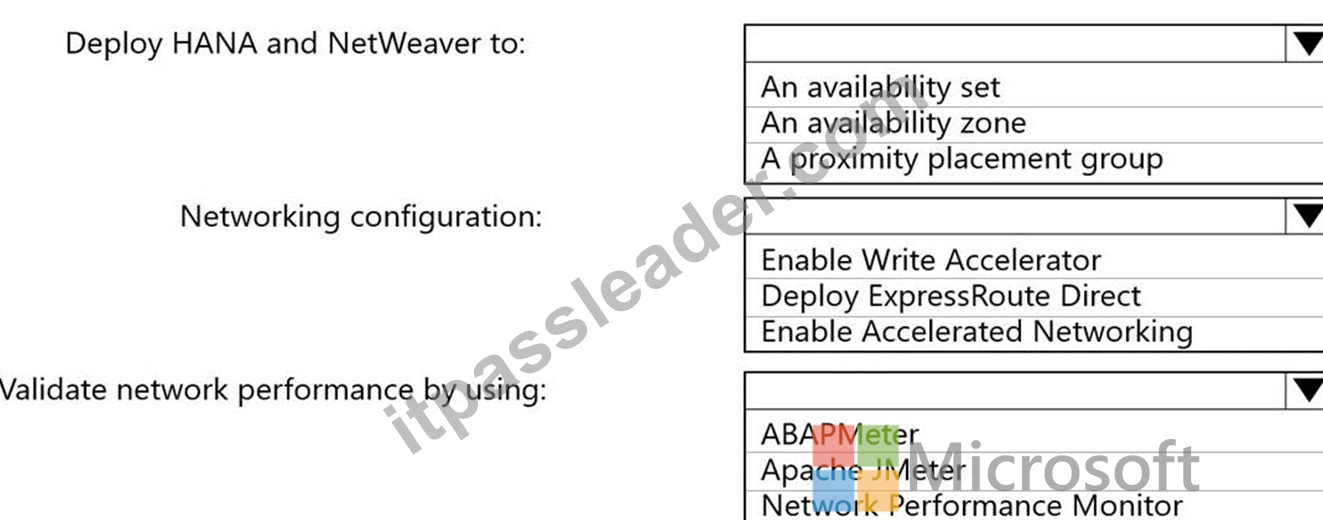
Answer:
Explanation: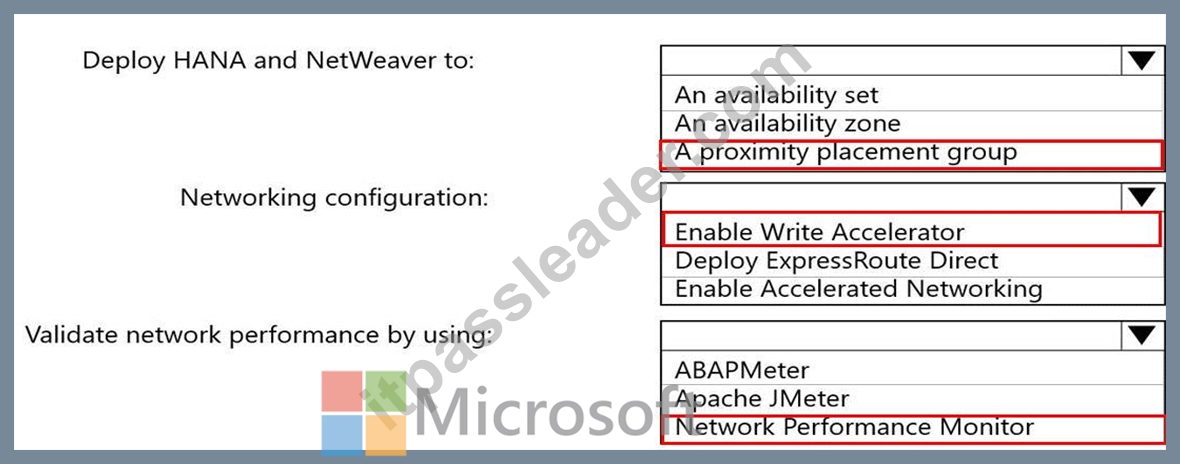
Reference:
https://docs.microsoft.com/en-us/azure/virtual-machines/workloads/sap/sap-proximity-placement-scenarios
https://docs.microsoft.com/en-us/azure/virtual-machines/workloads/sap/dbms_guide_general
https://techcommunity.microsoft.com/t5/running-sap-applications-on-the/sap-on-azure-general-update-march-2019/ba-p/377456
NEW QUESTION # 92
What should you use to perform load testing as part of the migration plan?
- A. Azure Monitor
- B. JMeter
- C. SAP LoadRunner by Micro Focus
- D. Azure Application Insights
Answer: C
Explanation:
Scenario: Upgrade and migrate SAP ECC to SAP Business Suite on HANA Enhancement Pack 8.
With the SAP LoadRunner application by Micro Focus, you can accelerate testing and development, reduce slowdowns and expenses, and gain a better understanding of performance issues. Validate software performance, virtualize your network, simulate workloads, benchmark production system performance, and optimize your deployment of SAP HANA software References:
https://www.sap.com/products/loadrunner.html
This is a case study. Case studies are not timed separately. You can use as much exam time as you would like to complete each case. However, there may be additional case studies and sections on this exam. You must manage your time to ensure that you are able to complete all questions included on this exam in the time provided.
To answer the questions included in a case study, you will need to reference information that is provided in the case study. Case studies might contain exhibits and other resources that provide more information about the scenario that is described in the case study. Each question is independent of the other questions in this case study.
At the end of this case study, a review screen will appear. This screen allows you to review your answers and to make changes before you move to the next section of the exam. After you begin a new section, you cannot return to this section.
To start the case study
To display the first question in this case study, click the Next button. Use the buttons in the left pane to explore the content of the case study before you answer the questions. Clicking these buttons displays information such as business requirements, existing environment, and problem statements. If the case study has an All Information tab, note that the information displayed is identical to the information displayed on the subsequent tabs. When you are ready to answer a question, click the Question button to return to the question.
Overview
Contoso, Ltd. is a manufacturing company that has 15,000 employees.
The company uses SAP for sales and manufacturing.
Contoso has sales offices in New York and London and manufacturing facilities in Boston and Seattle.
NEW QUESTION # 93
You have an SAP development landscape on Azure.
For each of the following statements, select Yes if the statement is true. Otherwise, select No.
NOTE: Each correct selection is worth one point.
Answer:
Explanation:
NEW QUESTION # 94
You plan to deploy a highly available SAP NetWeaver system to Azure virtual machines on SUSE Linux Enterprise Server (SLES) for SAP Applications.
You need to configure a load balancer that will be deployed in front of the ABAP Central Services (ASCS) tier. The solution must minimize the number of required load balancing rules.
What should you configure? To answer, select the appropriate options in the answer area.
NOTE: Each correct selection is worth one point.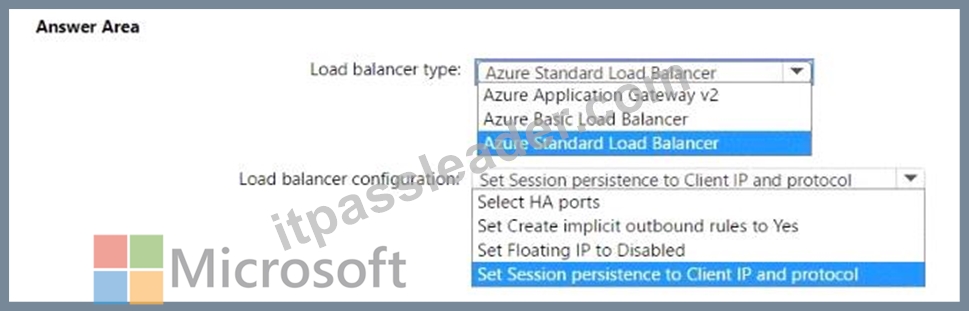
Answer:
Explanation: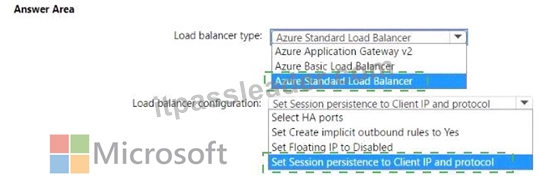
Explanation:
NEW QUESTION # 95
You plan to migrate an on-premises SAP development system to Azure.
Before the migration, you need to check the usage of the source system hardware, such as CPU, memory, network, etc.
Which transaction should you run from SAP GUI?
- A. DB01
- B. SM51
- C. OS07N
- D. DB12
Answer: C
Explanation:
SAP transaction OS07N (Remote Operating System Activity) is classified in the Basis Component module under application component Operating System Monitors and runs Monitoring Operating System program RSHOST1N upon execution.
NEW QUESTION # 96
......
Latest AZ-120 Exam Questions: https://www.itpassleader.com/Microsoft/AZ-120-dumps-pass-exam.html
- Updated Microsoft AZ-120 Practice Questions In Three Formats ???? Search for ⇛ AZ-120 ⇚ and download exam materials for free through ➠ www.pdfdumps.com ???? ????AZ-120 Flexible Testing Engine
- Valid Test AZ-120 Bootcamp ???? AZ-120 Flexible Testing Engine ???? AZ-120 Mock Test ???? Search for ▶ AZ-120 ◀ on ⏩ www.pdfvce.com ⏪ immediately to obtain a free download ????Valid AZ-120 Exam Review
- AZ-120 Questions Answers ???? Reliable AZ-120 Test Notes ⏫ Valid Test AZ-120 Bootcamp ???? Copy URL ⏩ www.examcollectionpass.com ⏪ open and search for ➤ AZ-120 ⮘ to download for free ????AZ-120 Questions Answers
- Quiz Microsoft - AZ-120 Useful Exam Topics ???? Open ✔ www.pdfvce.com ️✔️ enter ⮆ AZ-120 ⮄ and obtain a free download ????AZ-120 Questions Answers
- Marvelous Microsoft - AZ-120 - Exam Planning and Administering copyright for SAP Workloads Topics ???? Open 《 www.troytecdumps.com 》 enter ▷ AZ-120 ◁ and obtain a free download ????Interactive AZ-120 Course
- AZ-120 Latest Exam Question ???? Reliable AZ-120 Test Notes ???? AZ-120 Exam Simulator ???? Immediately open “ www.pdfvce.com ” and search for ➥ AZ-120 ???? to obtain a free download ????AZ-120 Latest Exam Question
- Passing AZ-120 Score ???? Latest AZ-120 Dumps Ebook ???? AZ-120 Clearer Explanation ???? Open ▶ www.vce4dumps.com ◀ and search for ➤ AZ-120 ⮘ to download exam materials for free ????AZ-120 Latest Real Exam
- Interactive AZ-120 Course ???? AZ-120 Clearer Explanation ???? Valid Test AZ-120 Bootcamp ???? Open ▛ www.pdfvce.com ▟ enter ⮆ AZ-120 ⮄ and obtain a free download ????Valid Exam AZ-120 Practice
- New AZ-120 Mock Exam ???? AZ-120 Questions Answers ???? AZ-120 Latest Exam Question ???? Go to website 「 www.prepawaypdf.com 」 open and search for “ AZ-120 ” to download for free ????Reliable AZ-120 Test Notes
- Exam AZ-120 Topics - Microsoft Latest AZ-120 Exam Questions: Planning and Administering copyright for SAP Workloads Pass Certainly ???? Immediately open 【 www.pdfvce.com 】 and search for ▶ AZ-120 ◀ to obtain a free download ⏩AZ-120 Mock Test
- Marvelous Microsoft - AZ-120 - Exam Planning and Administering copyright for SAP Workloads Topics ???? Copy URL ➤ www.easy4engine.com ⮘ open and search for ▷ AZ-120 ◁ to download for free ????Dumps AZ-120 Cost
- agnesupqg884747.angelinsblog.com, mariyahsajh357049.empirewiki.com, zoyajnnt070204.wiki-racconti.com, deweyxcob506564.blog-a-story.com, socialfactories.com, francesmphb137320.thelateblog.com, siambookmark.com, socialrator.com, drnesmaelsersawy.com, neilbwfk841361.blogsidea.com, Disposable vapes
What's more, part of that ITPassLeader AZ-120 dumps now are free: https://drive.google.com/open?id=1DoeCoHoT1raefb-zjJFY7l4kIXWBapoq
Report this wiki page